
What is Tajima beef?
Tajima cattle are a type of Japanese cattle that have been raised in the northern part of Hyogo Prefecture (Tajima region) since ancient times. It has a long history, and is even mentioned in books dating back to the Heian period (794-1185).
History of Tajima Cattle: Maintaining a Pure Bloodline
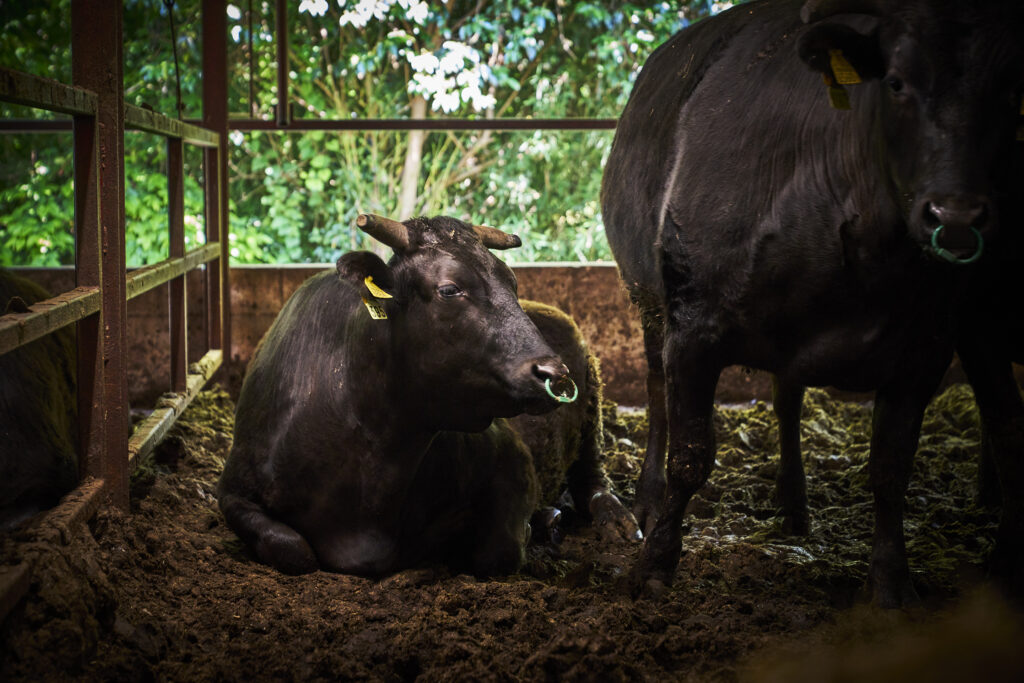
The main characteristic of Tajima cattle is their pure bloodline. The Tajima cattle have been improved over the years by avoiding crossbreeding with cows from other regions. In particular, since the Meiji era (1868-1912), a "cattle register" was established in Mikata-gun, the first such register in Japan, and thorough pedigree management has been carried out.
This closed environment and thorough management have preserved the superior quality of meat that is unique to Tajima cattle.
It is said that many of the Wagyu beef brands are actually descended from this Tajima cow.
The bull in particular is considered to be the ancestor of the 99.91 TP3T black cattle in Japan today, and can be considered the origin of Wagyu beef.
Difference between Tajima Beef and Kobe Beef
Tajima beef" and "Kobe beef" are often confused, but there is a clear difference.
- Tajima cow (Tajima cattle): Japanese black cattle or their meat, born and raised in Hyogo Prefecture and meeting certain standards.
Live cattle are sometimes called "tajikusushi" and when they are slaughtered for meat, they are called "tajimagyu. - Kobe BeefTajima Beef : This title is given to only those Tajima cattle that meet even stricter standards. For example, the meat quality grade must be A4 or B4 grade or higher, and the BMS value of fatty crossbreeding must be No.6 or higher.
In other words, there is no such thing as a type of cow called "Kobe beef," but the highest grade of Tajima beef is certified as "Kobe beef.
All Kobe beef is Tajima beef, but not all Tajima beef can be Kobe beef.
Tasty Tajima beef: Why it's perfect for sukiyaki
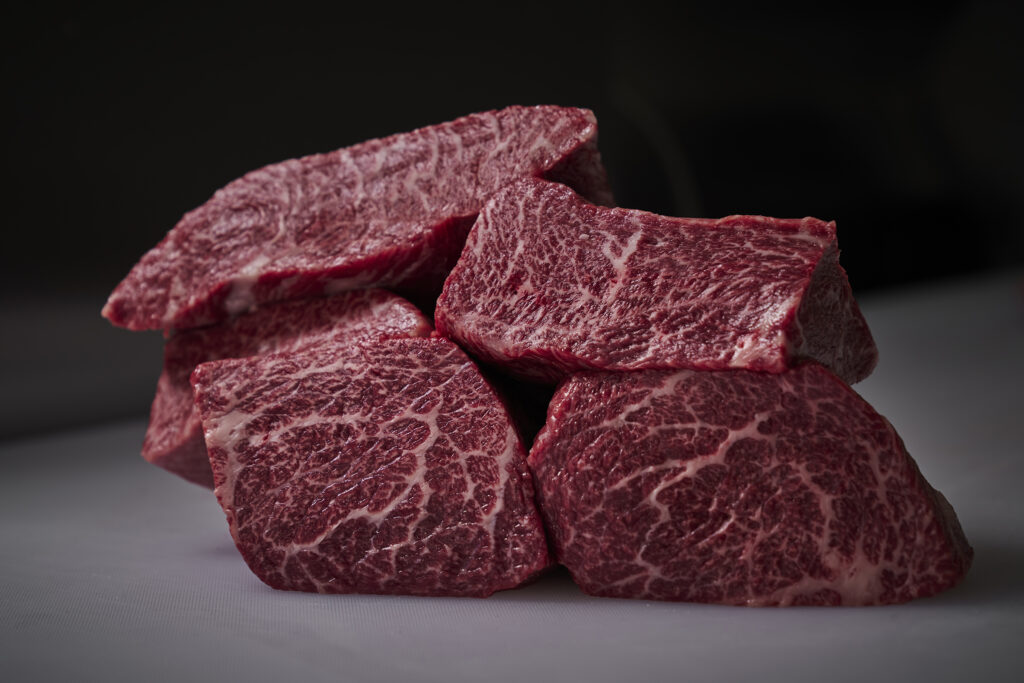
Tajima beef is characterized by a perfect balance of finely marbled sashi (marbling) and lean meat that melts in the mouth.
This meat quality goes very well with sukiyaki.
- Tenderness and Flavor: Tajima beef sashi has a low melting point, so when heated, as in sukiyaki, it melts immediately, making the meat more tender and flavorful.
- umami (fifth category of taste, corresponding to the flavour of glutamates): The meat has a strong natural flavor, and simmering it with vegetables, tofu, and other ingredients deepens the overall flavor.
Steak is recommended, but sukiyaki is one of the best ways to cook Tajima beef to enjoy its tenderness and flavor.
Tajima cattle have a long history, dating back as far as 1,200 years, and originally supported people's lives as "service cattle" that plowed fields and carried loads.
Because of its strength, it is said to have played an active role in the construction of Osaka Castle by Toyotomi Hideyoshi.
The geographical conditions of the Tajima region, surrounded by steep mountains, prevented crossbreeding with cattle from other regions and contributed to the preservation of pure bloodlines.
Among those who devoted themselves to the improvement of Tajima cattle bloodlines are Shusuke Maeda, who contributed to the establishment of the superior "Tsuru-ushi" female cattle line at the end of the Edo period, and Matsuzo Tajiri, who bred the famous "Tajiri-go" cattle.
Today, many famous Japanese beef brands, such as Matsusaka beef, Omi beef, and Yonezawa beef, use Tajima beef as their source cattle (moto-ushi: cattle used for breeding and fattening), and it is said that more than 85% of all black cattle in Japan, or 99.9% in one theory, have Tajima beef in their blood.
Further differences between Tajima and Kobe beef
The name "Kobe beef" does not actually refer to a live cow. In the process of slaughtering and grading Tajima cattle, only beef that meets particularly strict criteria is certified as "Kobe beef.
In addition to meat quality grade and BMS value, these standards include carcass weight regulations (e.g., 230 kg to 470 kg for heifers and 260 kg to 470 kg for steers).
Historically, the name "Kobe Beef" or "Kobe Beef" or "Kobe Beef" in English came first, and later the name "Kobe Beef" was officially added.
It is said that this was first called "KOBE BEEF" by foreigners who visited Kobe and were impressed by the taste of Tajima beef.
Currently, "Kobe Beef" and "Tajima Beef" are registered with the government under the Geographical Indications (GI) protection system, which guarantees their quality. These brands are strictly controlled by the Kobe Meat Distribution Promotion Council.
In general, Kobe beef, which must meet more stringent standards, tends to be more expensive than Tajima beef.
In terms of flavor, Kobe beef is said to be characterized by its consistent, delicate, elegant flavor and melt-in-your-mouth texture, while Tajima beef is said to offer a more powerful flavor and a diversity of flavors depending on the individual.
The Secret of Tasty Tajima Beef: Scientific Aspects and Meat Quality
One of the secrets of Tajima beef's delicious taste is the low melting point of its fat. While the fat of ordinary black Wagyu beef begins to melt at about 25°C, the fat of Tajima beef (especially the special Tajima beef called "Tajima Gen") melts at a lower temperature of about 12°C, giving it a melt-in-your-mouth texture and a light aftertaste.
This fat is also rich in amino acids, which are flavor compounds, and oleic acid, which is also good for your health.
Originally bred for farming, Tajima cattle are small, thin-boned, and have tight, high-quality muscle fiber.
They are less likely to develop subcutaneous and visceral fat, but they also have the genetic trait of being able to easily develop beautiful sinews in their meat.
These qualities lead to the deep flavor and excellent texture that are unique to Tajima beef.
Interestingly, it is said that the reason why Tajima beef has become so tasty is not necessarily a result of its initial improvement in pursuit of eating quality, but rather a fortunate coincidence between the characteristics fostered through adaptation to the harsh natural environment and agricultural work, and modern food preferences.
However, in recent years, the breeding of Tajima cattle has been progressing nationwide with an emphasis on marbling, and Tajima cattle are also being affected by this trend.
However, its essential taste is protected by its long history and lineage.